Book Review: Bergen, Doris L. War & Genocide: A Concise History of the Holocaust, 3rd Ed.

Bergen, Doris L. War & Genocide: A Concise History of the Holocaust, 3rd Ed. (Lanham, MD: Rowman & Littlefield Publishing Group, 2016, Pp. v, 361).

Reviewed by Albert Morales.

There have been many different books written about the Holocaust. Some examples are written memoirs by survivors or historians researching and writing secondhand accounts. This should not come as a shock to anyone since this event had global ramifications. But this book provides some different context. Doris Bergen, a Holocaust historian, Chancellor Rose, and Ray Wolfe Professor of Holocaust Studies at the University of Toronto, wrote War & Genocide: A Concise History of the Holocaust. She researched the Holocaust and attempted to prove her thesis.

Her book makes 4 major claims about the event: the Holocaust was a global event with worldwide repercussions; the Holocaust happened “step by step; the event “needs to be understood in the context of that conflict”; and Jews were the primary targets of this destruction, but their destinies related to other victim groups (Bergen 2016, 1). Bergen connects her four major claims by reiterating, “the Holocaust was an event in human history” (Bergen 2016, 1). She emphasized that human emotions were involved in all aspects. This includes perpetrators, witnesses, and victims. They all played a role in the Holocaust.

The initial chapter, “Dry Timber: Preconditions”, focuses on why, and deepens the question with another, “what made the holocaust possible” (Bergen 2016, 13)? The chapter provides the starting point and prerequisites for the rise of Nazism. The Holocaust was not a singular event. It’s a multifaceted process that grows over multiple years. Bergen breaks down the question into multiple parts. The first is a sub question, “why the Jews” (Bergen 2016, 14)? She answers the questions with the history of antisemitism and its various forms.

There was a diverse group of Jewish people spread throughout Europe. In some cases, they lived alongside Christians and Muslims. There were different social and wealthy classes of Jewish people. Bergen credits Nazi propaganda for creating the “category of the Jew, a composite based on myths and stereotypes” (Bergen, 2016, 20). She explains that there was no race identified as Jews. Now, Jews did differentiate among themselves like other religious sectors. but, the Nazis did not generalize or separate the distinctions amongst Jews. Their violence targeted all Jews. Bergen provides an example from a memoir by Peter Gray. Gray discusses his father and does not recall ever being ridiculed or harassed. They considered themselves German and did not find as Jewish solely.

Most historians focus solely on the Jews’ antisemitism, but Bergen provides context about Romas, disabled people, Afro-Germans and other groups that were targeted during the Holocaust. She adds that the Nazis were not the first to target these groups. This section answers one of her 4 claims that Jews were the primary target but related to other groups. She felt it was important “thinking about non-Jewish and Jewish victims together reveals something important about Nazi persecution” (Bergen, 2016, 25). Additionally, violence became infectious to the Nazis, hence the reasons why other groups slid under most Jews. Bergen continues with several sections explaining the attitudes towards the disabled, Roma, Sinti, homosexuals, and other targeted groups. She wraps up the chapter by blaming the Great War. Admittedly, the Great War was not the only factor, but it “prove that human life was cheap and expendable” (Bergen, 2016, 43). Bergen felt the war left behind a legacy of violence that helped paved the rise of Nazism.

The second chapter, “Leadership and Will” focuses on Adolf Hitler’s leadership and the Nazi Party. Bergen wants to answer how an ordinary person became the leader of a destructive enterprise. First, she explains the differences between certain types of scholars. There are scholars that disagree with how crucial Hitler was. She describes the differences between internationalists and functionalists. Internationalists consider Hitler to be the mastermind behind the mass murder and give the fact that it was a calculated plan. On the other hand, Functionalists believe the Holocaust was “a function of other developments, especially during the war” (Bergen, 2016, 46). They believe Hitler’s role was not crucial and was more of a pawn. Bergen admits she took the internationalist stance because she wants to find out the cause of Nazi crimes. To this question, Bergen believes, “we need to study those who initiated and carried them out” (Bergen, 2016, 46).

The book continues with the third and fourth chapters. These chapters focus on the Nazi Party prior to the start of the Second World War. Bergen believes the first six years between 1933-1938 were crucial to their rise and growth. Trying to answer the question, “how did Hitler begin to implement his ideas of race and space during the peacetime years of Nazi rule (Bergen, 2016, 69)? She provides context about the Nazi Revolution and the routinization. Initially, Hitler’s political position was not strong. But Hitler targeted Communism. He believed he gain allies by attacking this party within Germany. He used propaganda to gain support and blame communists for the uptick in violence throughout Germany. Bergen gives great details of the rise of his power and popularity among some Germans.

Bergen started the book by explaining the Holocaust was a human event. The concluding chapter examines if there is a happy or sad ending. Bergen is conflictive with this question. The Holocaust was a tragic event that had a devastating effect. The Allied victory did not immediately stop the destruction. Many troops were shocked to see some of the killing centers. Bergen admits there is no redemption story that “leaves us only with human beings, with their startling capacities for good and evil, and with an awareness of the complex ties that connect the fates of people and nations all over the world” (Bergen, 2016, 310). She adds that the Holocaust has a vicious legacy that still has a lasting effect.

Doris Bergen’s book is an excellent piece of writing. She achieved a level of analysis that is both complex and understandable. This reading covered a wide range of matters that are relevant to the Holocaust. Readers will learn multiple aspects that include Adolf Hitler, the rise of the Nazi Party, the reason they turned to destructive methods, and why they targeted certain groups. Bergen’s thesis is provided, and she answers the questions very well.

Establishing Denomination in an Unfree and Segregated Country

How were African Americans able to establish denominations in an unfree and segregated country? Many African Americans were brought to the New World as Slaves. This horrible institution led to African Americans having to practice religion separately from Whites. Eventually, separate churches and schools were formed by freed slaves which led to denominational initiatives. Historian Mark Noll explains “Blacks seized control of their own religious lives”.[1] African Americans were able to create new religious opportunities while dealing with racism and segregation. They were able to establish denominations in an unfree and segregated country by interpreting the scriptures in their terms, with the assistance of white preachers, and the growth of the Baptist and Methodist denominations.

The religion of African American Slaves flourished as a way of ordering and providing a vantage point from which to judge it.[2] But, when first introduced to Christianity, African Americans did not initially accept it. There were multiple reasons. Language barriers and cultural differences played a factor in preventing the acceptance of Christianity. In addition, to some settlers, Christianity contradicts the institution of slavery.[3] Some were trying to convince slaveowners to introduce Christianity and it would benefit them by making “slaves better workers than they otherwise would have been”.[4] Some followed suit but more were not convinced. These unconvinced individuals believed “Christianity among slaves came to be associated with revolt”.[5]

There were growing concerns about introducing Christianity to African American slaves. An example is in 1725 in South Carolina, a group of slaves revolted against their masters after reading a passage in the bible. The institution of slavery was evil and slaves seeking freedom in any matter should be commended, these were different times with different perspectives.

This uprising was not common, and whites began to teach scriptures to blacks. Knowledge and access to religious writing allowed individuals to pursue religious studies which helped convert slaves. Southern Baptists knew the importance of literacy, “the reading of his word we consider next in importance to the preaching of it”.[6] As blacks became more educated, they began to understand the scriptures and interpret the message. The Christian message being heard by blacks was different than what was being delivered. There were inaccuracies in the translation of Christianity. Many “white preachers to the slaves sought to sterilize the message”.[7] But, even with the efforts by whites to control all aspects of free blacks and slaves’ religion, they still created “their own folk religion and shaped it to their needs and interests”.[8]

There were educated blacks which countered the white preachers’ sermons. These inaccuracies provided hope to blacks because “the acceptance of religion did not only represent the simple promise of a blissful afterlife; it represented freedom from bondage and the beginning of a new way of life”.[9] The slaves’ communication allowed free play to the mind enabling African Americans to understand and comment “on the pathos, hu-mor, absurdity, sorrow, and warmth of the scenes they experienced”.[10] Slaves welcomed Christianity as a declaration of hope, self-respect, moral order and justice which eventually lead to black churches and denominations.

Due to whites feeling superior to African Americans, they were furthest outside to Christian groups. Yet “increasing numbers of African Americans adopted the Christian Faith”.[11] They were able to establish churches even with the resistance from white Americans.[12] Free blacks and slaves began to understand and even accept faith around the Revolution. They received lessons as historian, Will Gravely explained “because they had participated in the life of biracial congregations and denominations”.[13] Free blacks and slaves would accept their denominations as they were introduced to them.

During the Great Awakening, there were important preachers like George Whitefield and Samuel Davies who began to spread the gospel word. Their efforts to preach to African Americans steered the path which eventually led to blacks establishing their own churches and to a degree, denominations. George Whitefield is considered the “most important preacher of the Great Awakening”.[14] He preached to blacks during his missionaries’ ventures. While in Georgia, Whitefield received criticism for criticizing slaves’ owners. However, in time, he changed his stance and became an advocate for slavery in the state.

Samuel Davies “took an especially earnest interest in African Americans during his iterations in Virginia”.[15] Davies work with slaves was pivotal to the growth of Christianity among African Americans. He used hymns exclusively written for his effort among African Americans. In 1757, Davies wrote:

“what little success I have lately had, has been chiefly among the extremes of Gentlemen and Negroes. Indeed, God has been remarkably working among the latter. I have baptized about 150 adults; and at last sacramental solemnity, I had the pleasure of seeing the table graced with about 60 black faces.”[16]

The efforts of preachers like Whitefield and Davies during the Great Awakening had a major impact with the African American community. Christianity was growing among blacks and their faith became stronger due to the sermons they heard during the awakening which eventually led to black churches and black preachers. Historian, Dr. Charles H. Long explained when speaking of African Americans, “they overheard the Gospel, in describing the reception of Christianity among the enslaved Africans”.[17]

            The first black church was “Silver Bluff Church in Aiken County, South Carolina”.[18] An African American preacher named David George established the congregation.[19] The establishment of this congregation had a significance impact. They were hearing sermons from an individual which they could relate too. It provided hope and a sense of prosperous days ahead.

These black congregations were rare during this time. Most black Christians were attached to a white congregation and denomination. Some African Americans were even appointed for service in white congregations. This should not go unnoticed. The importance of white missionaries spreading and allowing African Americans to attend white services was paramount to the growth of Christianity within the community. The first ordain African American minister in a major white denomination was Lemuel Haynes.[20] His reputation grew the next 30 years as he traveled throughout the Northeast spreading Calvinism. Although with his great success it could only reach certain heights, as some racial bias grew. He was forced to retire which showed to some blacks that they could only succeed to certain pinnacles within white denominations. Eventually, they need to separate in order to create their own path and freedom.

 African Americans were introduced to religion from whites and their slaves owners. They were uncovering a faith that gave them spiritual purpose to their lives. There were multiple denominations that blacks come to responded through frontier preaching. These denominations also expressed disdain towards the institution of slavery. Baptist and Methodists paved a path for blacks which lead to their own churches and denominations.

Baptist and Methodist denominations were increasing its size due to slaves and free blacks joining its congregations. Baptists became controversial among slaves’ owners as many believed some Baptist’s supported slaves to revolt. They recruited from “the common people, and numbered women and African Americans among their leaders as well as followers”.[21] The Methodist denominations and some of their members believed in spreading their missionaries to all walks of life. Baptist and Methodist travelers got there earlier and to better affect. They arrived since the awakening with preachers and exhorters among the slaves themselves, so the “religion of the great antebellum revival did not come to them as an alien white intrusion”.[22]

Discussed earlier were important preachers which assisted in the growth of religion within the African Americans. There were members of Methodist denomination who impacted the African American community. Two members were John Wesley and Thomas Coke who sought to instill feeling and fortitude in the hearts. Wesley, known to be radically against slavery, wanted to spread the gospel. His methods led to Methodists going among the slaves and building a strong following. Coke preached the protestant “virtues of thrift, industry, and social peace”.[23]

Methodist allowed African Americans, regardless if freed or enslaved, to become licensed preachers. This included the South which was not common. Eventually led to black churches, first black Episcopal Church (1794), first black Methodist Church (1794), first black Northern Baptist Church (1809).[24] These congregations would remain with the National Level but in due time, after some disputes with land and other factors, there was a congregation that separated. This congregation would eventually become its own separate denomination. The Bethel Methodist Church would become the African Methodist Episcopal Church which was the one establishment under black control.[25]

African Methodist Episcopal Church (AME) started its own discipline in 1817. It led to another independent African American denomination joining the church. The Zion Church created in New York City follow suit. The history of these churches, which soon became its own denomination, is the most critical aspect to the growth of Christianity with the African American community.

To discuss the history of the African Methodist Episcopal (AME), one must introduce Richard Allen, born a slave who was converted by Methodists in his teen years. This church background “reveals much about the lengths to which African Americans Christians went to express the faith for themselves”.[26] Allen conversion began when Bishop Francis Asbury, leader of American Methodism, asked Allen to become his traveling companion.[27] Asbury saw the potential in Allen and ordained him several years later. By 1786, Allen preached to interracial groups of Methodists at St. George’s Church, Philadelphia and in Radnor Pennsylvania.[28]

Allen’s mission was to find and spread the gospel to his fellow African Americans. He was aided by others like Absalom Jones, William White and Dorus Ginnings. Their methods led to opposition by the St. George Church which eventually forced them from service and requested them to leave.[29] Another example where whites gave African Americans a venture to preach but would only allow certain parameters.

The discontent from St. George along with being asked to leave, these men through perseverance with aid from “Benjamin Rush and Robert Ralston raised funds for a new building, which became in 1794 the St. Thomas African Episcopal Church”.[30] Eventually, the friction between black and white Methodists led to Allen eagerness to form their own organization. Allen said to white Christians, “if you deny us your name as Methodists, you cannot seal up the scriptures from us, and deny us a name in heaven. We believe heaven is free for all who worship in spirit and truth.”[31] He sent out invitations to other black congregations and they all agreed to form African Methodist Episcopal (AME) church. The Pennsylvania Supreme Court ruled that the Bethel Church could control its own affairs and property.[32]

AME mission was to spread the belief “that human nature was perfectible, and that if social order which oppressed the black man were rearranged, he would become a productive citizen”.[33] They felt with the demise of slavery it allow all races to have a better society. The message was pure, and its goal was to destroyed slavery. They used spiritual singing to preach, similar to Davies hymns gave to slaves while in Virginia. Historian W.E.B Dubois explained “the most original and beautiful expression of human life and longing yet born on American soil.”[34] These songs are a testimony to a community creative genius, collective desire for freedom.[35]

The growth of AME was rapid, it started with 400 members and ventured into New York and New England area.[36] By 1836, the church membership grew to 7,594 and held conferences in the Midwest.[37] The denomination grew throughout the nation and spread gospel to blacks in order elevate the freedmen.

The growth of African Americans denominations was aided by the railroad system. After the Civil War, African Methodist Episcopalian assembled their resources and established a denominal church near a new railroad depot. The idea was more members of the denominations could move to the area due to the railroad being built in the town.[38] The idea to build churches around depot or terminal continued. It allowed blacks to attend services from far distances, regardless if the church was of a different denomination. The black churches opened their doors on Sundays to other congregations’ members which allowed for progress within the community. There was a developing relationship between railroad growth, black migration, and church formation.[39]

The AME did hesitate to grow in Southern States. They sent their own ministers and teachers to the South.[40] After the Civil War ended, some Christian delegates believed “the African Methodists are going to sweep the field”[41] The reason was the message Methodist were preaching. It was an uplift, discipline and educated message. They wanted to show that African Americans could succeed. They even called for more teachers to emphasize pride and independence. The AME church was “laying the groundwork for a post war explosion in membership”.[42]

The AME denomination led to other organized denominations within the African Community. After the Civil War, many freed African Americans left white controlled churches in order to establish their own. Even with the failures of the Reconstruction and Post Civil War, more African Americans “seized control of their own religious lives”.[43] There were important developments which included the growth of black churches in the South, growth of congregations within other denominations like Roman Catholics, Baptist and Pentecostal.[44] To understand prior to the Supreme Court ruling allowing Bethel church to runs its own entity, there were minimal congregations mostly in the North and 60 years later, there were multiple denominations and churches around the entire country.

 African Americans were able to take the teaching from white ministers and alter to their own beliefs. “One might say that this history often expresses the merger of a kind of African American civil religion within the confines of Christianity”.[45]  They were aided by some white preachers like Samuel Davies, George Whitefield and Francis Asbury. In the end it was African Americans understanding the gospel in their own terms regardless of how some slaves owners presented Christianity, the aid of important white preachers and most importantly the merger of several African American Churches creating the African Methodist Episcopal Church which led to their own denomination.

Bibliography

Bady, Eve J. From Bondage to Freedom: Slave Religion and the Slave Preacher. Order No. 1456936, Roosevelt University, 2008. In PROQUESTMS ProQuest Dissertations & Theses Global, http://ezproxy.liberty.edu/login?url=https://search-proquest-com.ezproxy.liberty.edu/docview/304805934?accountid=12085.


Baldwin, Lewis V. “Around the Family Altar: Domesticity in the African Methodist Episcopal Church, 1865-1900.” Church History 75 (3): 684–86, 2000.

Davis, David Brion. Inhuman Bondage: The Rise and Fall of Slavery in the New World. Oxford, England: Oxford University Press, 2006.

Fountain, Daniel L. Slavery, Civil War, and Salvation: African American Slaves and Christianity, 1830-1870. Conflicting Worlds. Baton Rouge: LSU Press, 2010.

Genovese, Eugene D. Roll, Jordan, Roll: The World the Slaves Made [First edition]. New York: Pantheon Books, 1974.

Gerbner, Katharine Reid. “Christian Slavery: Protestant Missions and Slave Conversion in the Atlantic World, 1660–1760.” Order No. 3566885, Harvard University, 2013. In PROQUESTMS ProQuest Central; ProQuest Central; ProQuest Dissertations & Theses Global, http://ezproxy.liberty.edu/login?url=https://search-proquest-com.ezproxy.liberty.edu/docview/1417073271?accountid=12085.

Giggie, John Michael. After Redemption Jim Crow and the Transformation of African American Religion in the Delta. 1875-1915 New York: Oxford University Press, 2008.

Howe, Daniel W. What Hath God Wrought: The Transformation of America, 1815-1848. New York: Oxford University Press, 2007

Long, Charles H. “African American Religion in the United States of America: An Interpretative Essay.” Nova Religio: The Journal of Alternative and Emergent Religions 7, no. 1 (2003): 11-27. Accessed March 24, 2020. doi:10.1525/nr.2003.7.1.11.

Mills, Frederick V. “Allen, Richard (1760-1831), American Methodist preacher and founder of the African Methodist Episcopal church.” American National Biography. 1 Feb. 2000; Accessed 15 Mar. 2020.

Noll, Mark A. A History of Christianity in the United States and Canada 2nd Edition. Michigan: William B. Errdmans Publishing Company, 2019

Rable, George C. God’s Almost Chosen Peoples: A Religious History of the American Civil War. Chapel Hill: University of North Carolina Press, 2010.

Stowell, Daniel W. Rebuilding Zion the Religious Reconstruction of the South. 1863-1877 New York: Oxford University Press, 1998.

Walker, Clarence E. “The A.M.E. Church and Reconstruction.” Negro History Bulletin 48, no. 1 (1985): 10-13. http://ezproxy.liberty.edu/login?url=https://search-proquest-com.ezproxy.liberty.edu/docview/1296771711?accountid=12085.

Williams, Regennia N. “Of griots and grace: the art of oral history and the history of African American religion.” Black History Bulletin 68, no. 2 (2005): 15+. Gale In Context: World History (accessed March 28, 2020). https://link-gale-com.ezproxy.liberty.edu/apps/doc/A159180967/WHIC?u=vic_liberty&sid=WHIC&xid=79bdc065.


[1] Noll, Mark A, A History of Christianity in the United States and Canada 2nd Edition, (Michigan: William B. Errdmans Publishing Company, 2019), 312

[2] Genovese, Eugene D. Roll, Jordan, Roll: The World the Slaves Made [First edition]. (New York: Pantheon Books, 1974), 162

[3] Noll, A History of Christianity in the United States and Canada 2nd Edition, 67

[4] Ibid., 67

[5] Ibid., 67

[6] Fountain, Daniel L. Slavery, Civil War, and Salvation: African American Slaves and Christianity, 1830-1870.   (Conflicting Worlds. Baton Rouge: LSU Press, 2010), 53

[7] Genovese, Eugene D. Roll, Jordan, Roll: The World the Slaves Made [First edition], 166

[8] Davis, David Brion. Inhuman Bondage: The Rise and Fall of Slavery in the New World. (Oxford, England: Oxford University Press, 2006), 203

[9] Bady, Eve J. From Bondage to Freedom: Slave Religion and the Slave Preacher. Order No. 1456936, (Roosevelt University, 2008), 2

[10] Davis, David Brion. Inhuman Bondage: The Rise and Fall of Slavery in the New World, 203

[11] Noll, A History of Christianity in the United States and Canada 2nd Edition, 181

[12] Ibid., 181

[13] Noll, A History of Christianity in the United States and Canada 2nd Edition, 182

[14] Ibid., 86

[15] Ibid., 97

[16] Ibid.

[17] Long, Charles H. “African American Religion in the United States of America: An Interpretative Essay.” Nova Religion: The Journal of Alternative and Emergent Religions 7, no. 1 (2003): 11-27. Accessed March 24, 2020, 18

[18] Noll, A History of Christianity in the United States and Canada 2nd Edition, 98

[19] Ibid.

[20] Ibid., 182

[21] Howe, Daniel W. What Hath God Wrought: The Transformation of America, 1815-1848. (New York: Oxford University Press, 2007), 181

[22] Howe, Daniel W. What Hath God Wrought: The Transformation of America, 1815-1848, 184

[23] Genovese, Eugene D. Roll, Jordan, Roll: The World the Slaves Made [First edition], 171

[24] Howe, Daniel W. What Hath God Wrought: The Transformation of America, 1815-1848, 182

[25] Ibid.

[26] Noll, A History of Christianity in the United States and Canada 2nd Edition, 183

[27] Mills, Frederick V. “Allen, Richard (1760-1831), American Methodist preacher and founder of the African Methodist Episcopal church.” American National Biography. 1 Feb. 2000; Accessed 15 Mar. 2020.

[28] Ibid.

[29] Ibid.

[30] Ibid.

[31] Noll, A History of Christianity in the United States and Canada 2nd Edition, 184

[32] Ibid.

[33] Walker, Clarence E. “The A.M.E. Church and Reconstruction.” (Negro History Bulletin 48, no. 1 1985), 10

[34] Williams, Regennia N. “Of griots and grace: the art of oral history and the history of African American religion.” Black History Bulletin 68, no. 2 (2005): 15+. Gale In Context: World History (accessed March 28, 2020).

[35] Ibid.

[36] Walker, Clarence E. “The A.M.E. Church and Reconstruction.” (Negro History Bulletin 48, no. 1 1985), 10

[37] Ibid.

[38] Giggie, John Michael. After Redemption Jim Crow and the Transformation of African American Religion in the Delta. 1875-1915 (New York: Oxford University Press, 2008), 35

[39] Giggie, John Michael. After Redemption Jim Crow and the Transformation of African American Religion in the Delta, 1875-1915 (New York: Oxford University Press, 2008), 36

[40] Rable, George C. God’s Almost Chosen Peoples: A Religious History of the American Civil War. (Chapel Hill: University of North Carolina Press, 2010), 294

[41] Ibid.

[42] Ibid.

[43] Noll, A History of Christianity in the United States and Canada 2nd Edition, 312

[44] Ibid., 313

[45] Long, Charles H. “African American Religion in the United States of America: An Interpretative Essay.” Nova Religion: The Journal of Alternative and Emergent Religions 7, no. 1 (2003): 11-27. Accessed March 24, 2020, 18
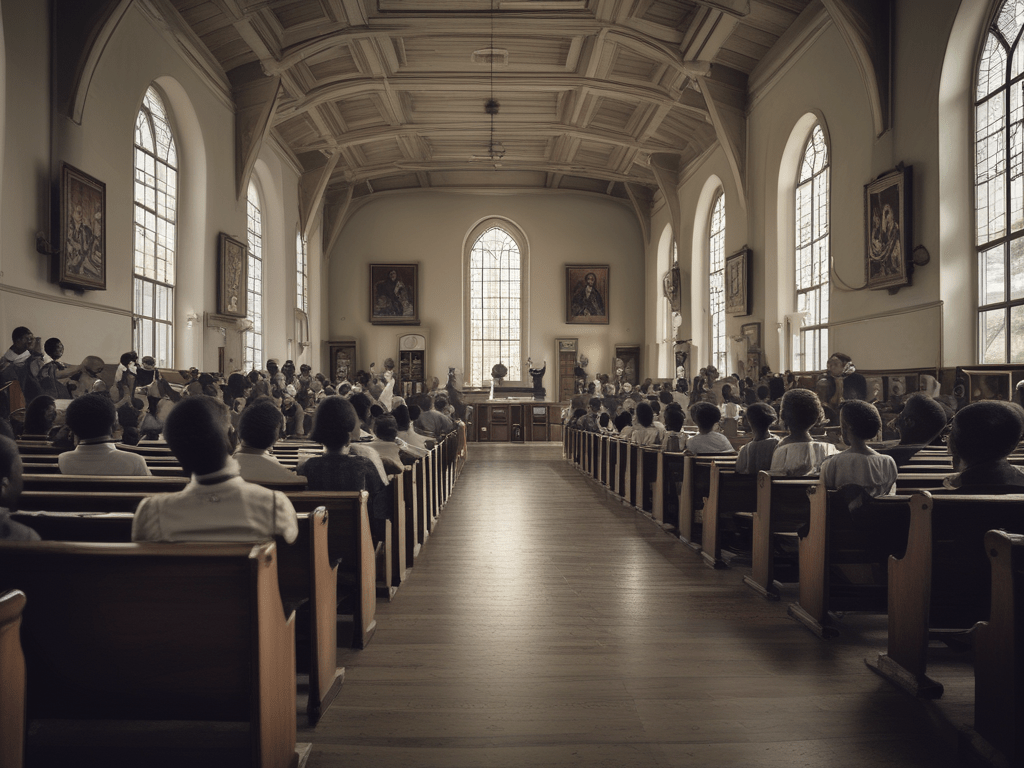
The Impact World War II had on African Americans

Introduction

Since the ratification of the U.S. Constitution, African Americans have strived for equal opportunities and treatment. Following the first Great War, black leaders like W.E.B. Dubois felt the war could be an opportunity to win freedom. Many African Americans believed enlisting in the military would earn them equal rights. However, the Progressive Presidents’ common racial stances did not support these beliefs. The Second World War reignited African Americans’ goals. What impact did the war years have on the rights of African Americans? Although there was some progress towards equal rights, segregation was constant in the South, and African Americans were treated as second-class citizens.[1]

Ending of Slavery

The Emancipation Proclamation was an executive order changing the status of millions of slaves to free. However, the ending of the Civil War propelled Congress to pass the 13th Amendment. This amendment made it official; the abolishment of the institution of slavery.[2] Some progress was coming. African Americans were able to attend an educational institutions. They were allowed to own land and earn a wage. Several were voted into Congress. The Reconstruction era brought forth the basis for freedom struggles.

The institutions established under slavery, like schools, families, and churches, were intensified after the Civil War. Some African Americans felt they could prosper through education. They felt education would allow them to read the bible and participate in politics. Others felt land ownership would bring economic independence. They believed economic freedom enhanced their opportunities for equal rights like white Americans. However, all African Americans agreed community was the foundation during the Reconstruction era.  

There were steps back after the Reconstruction era. Certain white groups in the South felt there was too much change and feared the South was corrupted. Many white southerners worked to reverse the Reconstruction achievement. They cut spending on public schools, especially if it hurts the black community. New laws were introduced to arrest individuals with no jobs and increased the punishment for any minor infractions. Soon to follow were poll taxes and literacy tests which looked to disenfranchise African Americans. The final straw was segregation. In 1896, the Plessy v. Ferguson ruling approved state laws requiring separate facilities for blacks and whites.[3]

African Americans Striving for Equality

Some African Americans felt enlisting could overturn or change the narrative inflicted on them by the Plessy decision. The Spanish-American War was this opportunity. Author and Professor of Political Science at the University of Washington, Christopher Parker wrote in his book, Fighting for Democracy: Black Veterans and the Struggle Against White Supremacy in the Postwar South, “black Americans’ service in the Spanish-American War would ultimately redound to the benefit of the race.”[4] Parker explained that African American editor E.E. Cooper felt the participation in this war would guide a sense of brotherhood and loosen the racial divide. The Progressive era did not see much progression for African Americans. African Americans agreed with this sentiment, and many joined the fight. However, while serving in Cuba, Theodore Roosevelt painted a picture that black soldiers were cowards. Even with these words from Roosevelt, many black soldiers earned medals of honor. Although there was a sense of accomplishment among these black soldiers, their achievements during this war did not lead to much progress or change.

After his tour in Cuba, Theodore Roosevelt joined the political ranks and soon became the 26th President. While serving as President, Roosevelt continued his antics and rhetoric against African Americans by saying they were unfit to vote. Another Progressive President, Woodrow Wilson, played a premier screening of the controversial film The Birth of a Nation. But as the Great War came knocking on the U.S. doorsteps, America needed the support of the black community.

The Great War

W.E.B Dubois campaigned for African Americans to enlist in the military. He urged them to fully participate in combat missions.[5] He felt “only when [the Negro] rose and fought and killed did emancipation become possible.”[6] Similar to the Spanish-America War, DuBois felt this sacrifice could lead to “the right to vote and the right to work and the right to live without insult”.[7] There was a divide amongst the black community over this stance, but for the most part, many sided with Dubois. This is confirmed by the approximately 370,000 African Americans that served in the Great War.[8] However, there was no progression toward equality following the first Great War.

Dubois conveys his disappointment while the black units returned home. Dubois expresses his disdain in an editorial, Returning Soldiers, “the land that disenfranchise its citizens and calls itself a democracy lies and know it lies.”[9] In this same editorial, Dubois explains that this nation also belongs to African Americans and even after its betrayal, “under similar circumstances, we would fight again.”[10] Approximately 20 years later, the nation would indeed need African Americans to fight again.

The Great Depression

African Americans suffered during the Great Depression. They were the first to lose their jobs and the last to be given the opportunity to rebound. Blacks suffered high unemployment rates. Southern white democrats showed the limitations of the New Deal with reinforced housing segregation. Blacks barely benefited, if at all, from all the new initiatives passed by Franklin D. Roosevelt’s (FDR) New Deal. With the approach of the Second World War, African Americans had to examine their values and beliefs; constantly being treated as second class citizens all while showing they would fight for the nation they called home. However, as seen in prior wars, blacks believed they needed to be involved and World War II would be no different. But, with the Second World War, could Americans have learned from their previous mistakes? Could African Americans see the change they’ve desired since the revolutionary war?

World War II

African Americans felt enlisting in World War II would bring a new way of living and change they felt would happen since the Spanish American War. Historian Helen Black wrote an article, Three Generations, Three Wars: African American Veterans, she explains that African American “expected that competencies learned in the service would upgrade their status as skilled workers when they returned home.”[11]

In addition, some African Americans felt that if Adolf Hitler had prevailed, their fate could be far worse than in its current state. Author and Activist Merze Tate wrote an article during the war, The War Aims of World War I and World War II and Their Relation to the Darker Peoples of the World, that African Americans enlisted are “willing to die to destroy Nazism abroad only if he is certain that principles of that philosophy shall not prevail at home.”[12] This comes with the belief that Nazism existed within the United States. African Americans equivalent their treatment by Americans like Reich regime in Germany. Black Newspaper during the war explained “our biggest problem at the moment is to watch the Hitlers right here in our own country.”[13]

Segregation abroad and at home

Even after fighting in the previous wars, segregation was still prevalent. Enlisted blacks did not train, sleep or service with their white counterparts. Many white commanders misrepresented the impact African American servicemen had on the war. They focused on the failures “and highlighted the supposed frailties of the African race.”[14] This disrupted the morale of African American units. Chas Thompson, an editor for the Journal of Negro Education, wrote an article, The Basis of Negro Morale in World War II, explaining the effects of segregation and treatment. He states that African Americans “have tried to point out to the Government that the gratuitous and reactionary segregation policy of the armed forces not only must inevitably affect Negro morale but constitutes an obstacle to the war effort in general.”[15]

There were instances that wounded black soldiers needing blood transfusions had their own designated blood to avoid mixing with different races.[16] Tate explains that the practice started back home when “in the refusal of the Red Cross to receive Negro blood and then in the United States Army and Navy order to the Red Cross to Jim Crow that blood.”[17]

Not only did the enlisted African Americans faced ridicule aboard, but they also faced similar treatment back home. Many politicians wanted to ensure returning servicemen and women had policies in place to ease the transition. However, African American veterans were not included in these policies. The newly established G.I. Bill benefits were not equally distributed to black veterans.[18] These types of inequalities back home led to many African Americans feeling as if they were fighting a two-front war themselves. They were fighting abroad against Germans and back home with whites. Historian Kimberly Phillips provided firsthand views in her book, War! What is it Good For? On a newly drafted soldiers, James Thompson. Thompson “questioned why he should serve his country in its victory over the forces while the army inducted him as half American in a Jim Crow military.”[19] Eventually, this belief called for victory both abroad and at home which would be known as the “Double V Campaign”. This campaign allowed African Americans to create their own “photographs, illustrations, comics, cartoons, and sketches.”[20]

FDR and Truman Initiatives

Rhetoric of equal rights helped spur some changes and progress. President FDR approached discrimination differently than previous counterparts, denouncing any theory of racial mastery. FDR passed the Fair Employment Practices Commission. This bill was passed only after A. Phillip Randolph called for a March on Washington to end segregation.[21] In addition, several anti-lynching bills had been introduced since 1940. Lynching has been an issue since the end of the Reconstruction era. Many African American activists have written about the horror of these horrific crimes, but, for the most part have occurred without many consequences. Author Florence Murray wrote an article, The Negro and Civil Liberties during World War II explains some of the progress that occurred during her era. She mentions that “for the first time in forty years suspected lynchers were indicted in the Federal courts and a few were convicted.”[22]

Although not all indictments led to convictions, the small number of convictions in multiple states like North Carolina and Georgia was considered progress. Prior to World War II, almost all whites were never indicted, and the local authorities did not apply any pressure to stop these lynching events. Another form of progress was in the clampdown of peonage.[23] It may be difficult to understand how African Americans were held in a state of peonage because of debts. This was the case until the war; there have been several trials and “convictions obtained in four cases.”[24]

Some progress had occurred in politics. The Texas Democratic Party primary was deemed to be unconstitutional by the Supreme Court.[25] There had been attacks against the Poll Tax during the war. The voting rights issues had been covered by several newspapers around the country. Although they were minor improvements, the coverage alone against the all-white primary and the voting rights was not often covered in prior years. Therefore, the Second World War was different. While there was not absolute change on racial issues, “the chance for victory would be enhanced if the western world endorsed democracy at home and self-determination of the colonies.”[26]

One of the first steps President Harry Truman, ending segregation within the military. As Neil Wynn explained in his book, The African American Experience during World War II, Truman “was the first President to campaign actively in the black community when he addressed black audiences in Harlem during the 1948 campaign.”[27] There were several segregation rulings during the Truman presidency. These rulings were massive towards equality in education and eventually led to Brown vs. Board of Education. The African American experiences during World War II had some impact on the developments that occurred in the 1950s and 60s. There are some historians that debate this notion and believe other decades have had more effect.

Conclusion

African American service personnel returned home expecting to see change. These individuals contributed to the war as did their white counterparts. They received some support, but many did not. At times, the tensions escalated to violence among civilians and military personnel. Unfortunately, race issues dominated the postwar years, as many African Americans became more determined to see change. The war did not bring total change and many African American personnel and veterans were treated as second class citizens. But it did bring enough to establish conditions for the next generation to demand the United States to end segregation and treat them as equals.

Bibliography

Alkebulan, Paul. The African American Press in World War II: Toward Victory at Home and Abroad. Blue Ridge Summit: Lexington Books, 2014.

Black, Helen K. “Three Generations, Three Wars: African American Veterans.” The Gerontologist 56, no. 1 (2016): 33-41.

Brown, Stephanie. The Postwar African American Novel: Protest and Discontent, 1945-1950. University Press of Mississippi, 2011. University Press of Mississippi, 2014

Moore, Brenda L. To Serve My Country, to Serve My Race: The Story of the Only African American WACS Stationed Overseas During World War II. New York: NYU Press, 1996.

Murray, Florence. “The Negro and Civil Liberties during World War II.” Social Forces 24, no. 2 (1945): 211–16.

Phillips, Kimberley L. War! what is it Good for? Black Freedom Struggles and the U.S. Military from World War II to Iraq. 1st ed. Chapel Hill: University of North Carolina Press, 2012

Parker, Christopher S. Fighting for Democracy: Black Veterans and the Struggle Against White Supremacy in the Postwar South. Princeton University Press, 2009.

Webb, Clive. “The Nazi Persecution of Jews and the African American Freedom Struggle.” Patterns of Prejudice 53, no. 4 (2019): 337-362.

Wynn, Neil A. The African American Experience during World War II. Lanham: Rowman & Littlefield Publishers, 2010.

Tate, Merze. “The War Aims of World War I and World War II and their Relation to the Darker Peoples of the World.” The Journal of Negro Education 12, no. 3 (1943): 521-532.

Thompson, Chas H. “The Basis of Negro Morale in World War II.” The Journal of Negro Education 11, no. 4 (1942): 454–64.


Endnotes

[1] (Denis 2015)

[2] Christopher Parker, Fighting for Democracy: Black Veterans and the Struggle Against White Supremacy in the Postwar South, (Princeton University Press, 2009), 27.

[3] Ibid., 30

[4] Ibid.

[5] Kimberly Philips, War! what is it Good for? Black Freedom Struggles and the U.S. Military from World War II to Iraq (Chapel Hill: University of North Carolina Press, 2012), 9.

[6] Ibid.

[7] Parker, Fighting for Democracy: Black Veterans and the Struggle Against White Supremacy in the Postwar South, 33.

[8] Neil A Wynn, The African American Experience during World War II, (Lanham: Rowman & Littlefield Publishers, 2010), 5.

[9] Ibid., 100.

[10] Ibid., 101.

[11] Helen K. Black, “Three Generations, Three Wars: African American Veterans”, (The Gerontologist 56, no. 1 2016), 34.

[12] Tate, Merze. “The War Aims of World War I and World War II and their Relation to the Darker Peoples of the World”, (The Journal of Negro Education 12, no. 3 1943), 529.

[13] Clive Webb, “The Nazi Persecution of Jews and the African American Freedom Struggle”, (Patterns of Prejudice 53, no. 4 2019), 340.

[14] Ibid.

[15] Chas Thompson, “The Basis of Negro Morale in World War II”, (The Journal of Negro Education 11, no. 4 1942), 457.

[16] Black, The Gerontologist 56, 34.

[17] Merze, The Journal of Negro Education 12, 529.

[18] Brenda L. Moore, To Serve My Country, to Serve My Race: The Story of the Only African American WACS Stationed Overseas During World War II, (New York: NYU Press, 1996), 12.

[19] Philips, War! what is it Good for? Black Freedom Struggles and the U.S. Military from World War II to Iraq, 24.

[20] Ibid., 25.

[21] Ibid.,103.

[22] Florence Murray, “The Negro and Civil Liberties during World War II”, (Social Forces 24, no. 2 1945), 212.

[23] Ibid., 213.

[24]  Ibid.

[25] Paul Alkebuian, The African American Press in World War II: Toward Victory at Home and Abroad (Blue Ridge Summit: Lexington Books, 2014), 132.

[26] Ibid., 144.

[27] Wynn, The African American Experience during World War II, 94.

Eyes on the Prize by PBS Documentary

Video below is on a great documentary by PBS based loosely on the Albany GA segregation issues to the March on Washington. The link to the entire documentary is below….it’s a great watch!

Credit to PBS. ORG “The Civil Rights Movement discovers the power of mass demonstrations as the Reverend Martin Luther King, Jr. emerges as its most visible leader. Some demonstrations succeed; others fail. But the triumphant March on Washington, D.C., under King’s leadership shows mounting national support for civil rights. President John F. Kennedy proposes the Civil Rights Act.”

https://www.pbs.org/video/no-easy-walk-1961-1963-xafld1/

John Locke’s – Two Treatises of Government

The English Philosopher John Locke inspired the enlightenment and one of the most important American documents. The document called the Declaration of Independence.  His political beliefs were based on the concept of a social contract between citizens. Especially in the importance of toleration, particularly in matters of religion. The goal of this writing is to summarize one of Locke’s books. In the book, Two Treatises of Government, Locke writes and explains defending natural rights and government responsibilities to protecting those rights. He also discusses the religious impact to these rights and how absolute monarch was not the right way to govern mankind.

John Locke’s writing style of politics remain captivating. This reading perseveres multiple centuries as inspiring work. Locke’s era endured tempestuous political conflicts. Two Treatises of Government was believed to be written to justify the Revolution of 1688. King James II was overthrown by Protestant William of Orange. However, some historians have attempted to rebuke this belief. This notion has not been agreed upon by many scholars. There is an agreement that this book was written during the Exclusion Crisis. When Locke was by the side of Earl of Shaftesbury.  

In reading this work, Locke provides political ideas, rejecting the divine rights of Kings. Locke believes societies should form government with common agreement.  The Preface starts with Locke writing about King William, “the king, and body of the nation, have since so thoroughly confuted his Hypothesis, that I suppose nobody hereafter will have either the confidence to appear against our common safety, and be again an advocate for slavery”. He explains the King’s stance on human rights and how change needed to happen. He continued in Chapter One with the issue of slavery. “Slavery is so vile and miserable an estate of man”. Locke’s views were ahead of its time.

He advanced arguments about freedom of conscience and belief, the relations between religion and politics. In the second Chapter, Locke requested for man to be freed as the law required. He felt “that all government is absolute monarchy” and “that no man is born free”. These words inspired many politicians and advocates to fight for freedom.  Locke focuses on the nature of property, family and the foundations of political legitimacy. These issues became the norm to political disagreement in the modern West.

History shows us monarchy rule had many rebellions. The reasoning echoed in Locke’s words. Locke explains that princes believed “they have a divine right to absolute power”. He continues that many individuals with royal bloodlines denied citizens with their natural freedom. They lust for power. Many Princes thirsted for full authority and believed if they lied to the people they would follow in suit. Locke says they “exposed all subjects to the utmost misery of tyranny and oppression”.

Chapter III, Of Adam’s Title to Sovereignty by Creation had six sections. Locke quotes Aristotle in this chapter. This was interesting due to Aristotle’s beliefs on slavery. Aristotle believed the usefulness of slaves diverges little from that of animals. But Locke uses Aristotle to argue his points with biblical scripture. Aristotle wrote “A natural freedom of mankind cannot be supposed without the denial of the creation of Adam”. Locke explains when God created Adam, he was free without any authority like parents. He explains this goes the same with animals like the lion. Adam was given his title by God, “one might have supposed mankind free without the denying the creation of Adam, since it was God’s appointment made him monarch”.

Locke continued his points. His writing wants to put together Adam’s creation and his appointment. The argument comes full circle. He understands that “Adam was a king from his creation”. But there are no people to rule and there is no government to govern. He explains “I cannot see, how our author can say in this sense, that by God’s appointment, as soon as Adam was created, he was monarch of the world”. In this chapter, the writing shows that the writer was conflicted and at times arguing with himself. Religion is never an easy conversation and Locke appears to be conflicted in these sections.

Locke wrote for all mankind. He worried about the rights of all people, everywhere. He uses scripts and language from the Bible to validate his points. “Scripture or reason I am sure do not anywhere say so, notwithstanding the noise of divine right, as if divine authority hath subjected us to the unlimited will of another.” Imagine if people did not start living their lives as God intended it to be. Locke worried about this notion. He felt people could make their own decision. He believed in the “state of nature” all was free.

Summarizing this reading was no simple task. But, Two Treatises of Government was an interesting read and revealed many of Locke’s beliefs. There is some confliction within the writing. He felt men were entitled to certain rights and duties. But when it came to religion, he attempted to rationale the creation of Adam not being an absolute monarch. He used the Greek Philosopher, Aristotle as a source. He argued back and forth, but in Section 82, he gives two explanations: “power of Adam was not to end with him” and “princes and rulers now on earth are possessed of this power of Adam by a right way of conveyance derived to them”.

Liberty, Life and ownership of Properties are rights we argue to this day. As Americans our Constitution protects these rights. Locke believed it was the task of any state to protect man’s rights. He continued if the government did not protect these rights, the citizens could seek new ruler. People have the right to decide who should rule. Doesn’t this sound familiar? John Locke’s writings and beliefs inspired many of our founding fathers, and it could be seen in many important U.S. documents, most notably The Declaration of Independence.

Bibliography

Locke, John. Two Treatises of Government. Cambridge Texts in the History of Political Thought. Cambridge, UK: Cambridge University Press, 1988.

George Marsden: The Outrageous idea of Christian Scholarship

Why are Christian perspectives not welcome in academics? George Marsden analyzes this question in various ways. Marsden has written work arguing individuals like Perry Miller and scholarly work to educate historians on Fundamentalist. The reading, The Outrageous idea of Christian Scholarship, is no different from his past work. Marsden explains “what is it about dominant academic culture that teaches people they must suppress reflection on the intellectual implications of their faith?”.[1] His main goal is to analyze the reasoning academia felt compel to leave faith base materials.    

Carpenter, Joel. “American Evangelicalism: George Marsden and the State of American Religious History Ed. by Darren Dochuk Et Al. (Review).” The Catholic Historical Review 102, no. 3 (2016): 639-640.

Marsden, George. “Confessing History: Explorations in Christian Faith and the Historian’s Vocation.” Fides Et Historia 44, no. 1 (Winter, 2012): 93-5.

Marsden, George M. The Outrageous Idea of Christian Scholarship. New York: Oxford University Press, 1998. Oxford Scholarship Online, 2011.


[1] George Marsden, The Outrageous Idea of Christian Scholarship, (New York: Oxford University Press, 1998. Oxford Scholarship Online, 2011), 6

The First Incorporated All African American Town: Eatonville

The year is 1887, over 20 years since General Robert E. Lee surrendered in Virginia. Freed African Americans slaves are trying to acclimate to their freedom. Black settlements are forming throughout the United States. So, in a small area located in Central Florida, African Americans established a town called Eatonville. This small town is considered the first Incorporated African American municipality in America. It was an achievement for once-enslaved black men and women throughout nation.

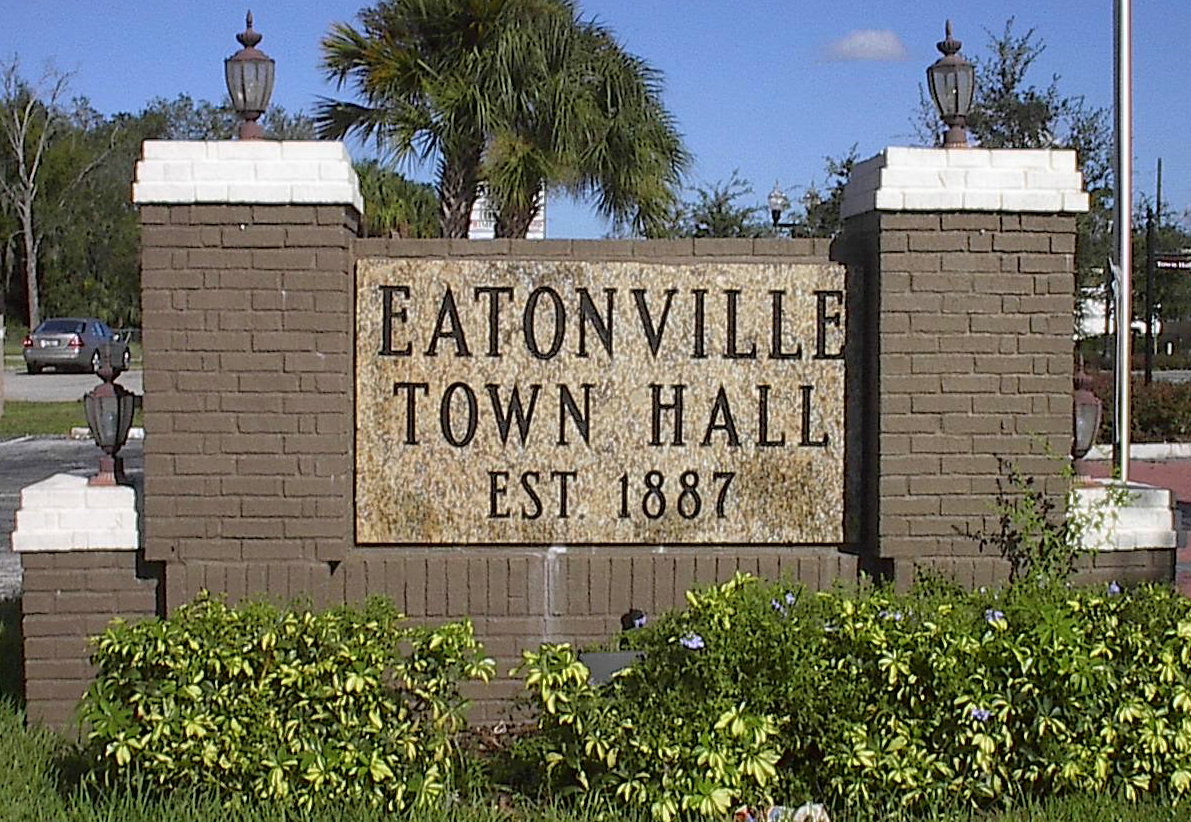
The historic township of Eatonville is “childhood home to Harlem Renaissance author Zora Neale Hurston and a heritage tourism site marketed today as the Oldest Incorporated African American Municipality in America”.[1] The town is named after Josiah Eaton. Eaton was joined by fellow union officer Captain Lewis Lawrence and Joseph Clark with establishing the town. They wanted to “create a village for the colored people in the near vicinity of his grove”.[2] Eaton purchased many acres and built a church to proclaim the achievement (see Fig. 1).

Eatonville was a town to “promote home ownership and self-governance among African-Americans workers”.[3] As Zora Neale Hurston explains, Eatonville was a town built to “thrive with a sense of pride and security that was denied to many black people in the South”.[4] The establishment of the town quickly help other areas. Due to African American owning property, it played a pivotal role in the 1887 incorporation of Winter Park. African Americans voters “provided crucial votes for incorporation and, for a brief time, held elected town offices alongside whites”.[5] However, as Historian Scot French explain it was this display of unity within the black community that possibilities led to “first state-chartered” all black town. Although some scholars argue Princeton, NC also claimed to be the first Southern all-black towns in American history. This notion is disputed by Eatonville officials.

After the Civil War, many freed slaves moved to different parts of the country. Many towns “offered freedom from white dominance and the chance for blacks to govern themselves”.[6] For this reason, many towns like Princeville claim the notion that they’re the first all-black town. However, Eatonville representatives explains their town was founded “entirely by blacks, was the first incorporated all-black town because Princeville had about 45 white residents until 1900, when it became nearly all black”.[7]

Establishing the municipal of Eatonville was no easy task. To establish a success town, the residents and officials need funds and materials to build said town. In addition, food and the proper equipment is needed. However, due to racial prejudice these resources were not readily available. Imagine moving into a new neighborhood and residents did not welcome you. Or you needed assistance to move a large piece of furniture upstairs and no one offered a helping hand. These examples were a reality for African Americans in Eatonville.


Fig. 1 – Eatonville, FL[8]

Biography:

Beauchamp, Gorman. “Zora Neale Hurston’s Other Eatonville.” (The Texas Review 32, no. 3–4 2011), 75–87.

French, Scot. “Social Preservation and Moral Capitalism in the Historic Black Township of Eatonville, Florida: A Case Study of “Reverse Gentrification”.” (Change Over Time 8, no. 1 2018), 54-72.

Johnson, Constance. “A Place to Be Free.” U.S. News & World Report., vol. 112, no. 8, US News Pub Corp., 1992.

Manigault-Bryant, James A., and Lerhonda S. Manigault-Bryant. “Conjuring Pasts and Ethnographic Presents in Zora Neale Hurston’s Modernity.” (Journal of Africana Religions 4, no. 2 2016), 225-235. 


[1] Scot French, “Social Preservation and Moral Capitalism in the Historic Black Township of Eatonville, Florida: A Case Study of “Reverse Gentrification”, (Change Over Time 8, no. 1 2018), 56

[2] Ibid., 60

[3] Ibid., 62

[4] Gorman Beauchamp, “Zora Neale Hurston’s Other Eatonville.” (The Texas Review 32, no. 3–4 2011), 76.

[5] Scot French, “Social Preservation and Moral Capitalism in the Historic Black Township of Eatonville, Florida: A Case Study of “Reverse Gentrification”, 64

[6] Constance Johnston, “A Place to Be Free”, (U.S. News & World Report., vol. 112, no. 8, US News Pub Corp., 1992)

[7] Ibid.

[8] Scot French, “Social Preservation and Moral Capitalism in the Historic Black Township of Eatonville, Florida: A Case Study of “Reverse Gentrification”, 61

Project Muse: Jane Austen and The Abolitionist Turn

Teaching history to students is no easy task. Professor Patricia Matthews struggles to teach Jane Austen novels in a multicultural classroom. She’s adapts and learn how’s to engage to all of her students about an individual that she idolized. In her article, she explains the many methods, “that moved me away from a somewhat traditional engagement with the history of the novel”.[1]

Beauchamp, Gorman. “Zora Neale Hurston’s Other Eatonville.” (The Texas Review 32, no. 3–4 2011), 75–87.

French, Scot. “Social Preservation and Moral Capitalism in the Historic Black Township of Eatonville, Florida: A Case Study of “Reverse Gentrification”.” (Change Over Time 8, no. 1 2018), 54-72.

Halsey, Katie. Jane Austen and Her Readers, 1786–1945. Anthem Press, 2012.

Manigault-Bryant, James A., and Lerhonda S. Manigault-Bryant. “Conjuring Pasts and Ethnographic Presents in Zora Neale Hurston’s Modernity.” (Journal of Africana Religions 4, no. 2 2016), 225-235. 

Matthew, Patricia A. “Jane Austen and the Abolitionist Turn.” (Texas Studies in Literature and Language 61, no. 4 2019), 345-361. 


[1]Patricia Matthew, “Jane Austen and the Abolitionist Turn”, (Texas Studies in Literature and Language 61, no. 4 2019), 345

Digital History – The Abolitionists

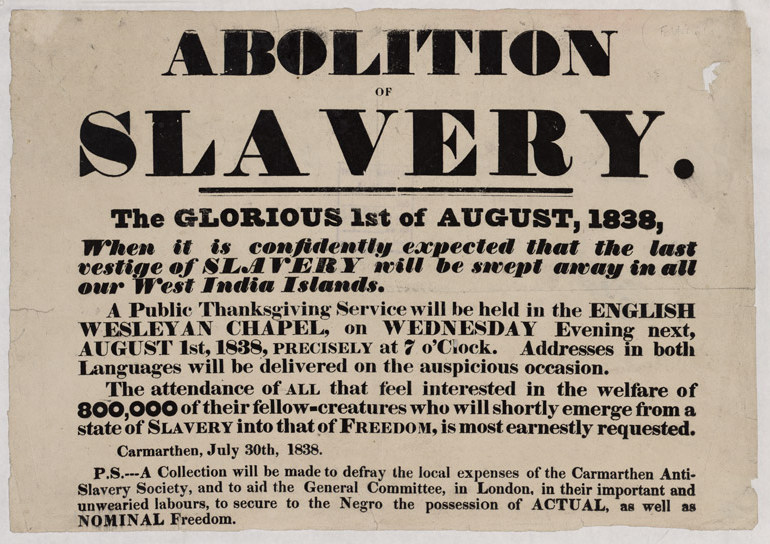
Abolitionists played an important role during the 1850’s and 1860’s. Several Newspapers wrote articles explaining their role during this era. The New Times, Baltimore Sun and the New York Daily Times are just a few of these Newspaper distributors that wrote articles chronicling these events. I discussed an article by the New York Daily Times which writes about Wendell Phillips and their beliefs against slavery. The other article is by Ira Berlin. Dr. Berlin articles explains the affect the Emancipation Proclamation had on slavery. He writes “a document whose grand title promised so much but those bland words delivered so little”.[1]

“Alleged Abolitionists.” The Sun (1837-1995), Dec 10, 1860, 1.

Berlin, Ira. “How the Slaves Freed Themselves: After 130 Years, Reading the Emancipation Proclamation Right.” The Washington Post (1974-Current File), Dec 27, 1992. 1.

“CONVENTION OF SLAVE-HOLDERS ANNAPOLIS, Jan. 15, 1842: Propositions Recommended by the Convention to the Consideration of the Legislature.” The Sun (1837-1995), Jan 18, 1842, 1.

Grinspan, Jon. “Was Abolitionism a Failure?” New York Times (1923-Current File), Feb 01, 2015, 1.

“The Abolitionists.” New York Daily Times (1851-1857), May 14, 1857, 4.


[1] Ira Berlin, “How the Slaves Freed Themselves: After 130 Years, Reading the Emancipation Proclamation Right”, The Washington Post, 1974-Current File, Dec 27, 1992), 1

The Role of Abolitionist towards Emancipation

What was the role of Abolitionist towards Emancipation? This topic has endless possibilities. On this week video, we discuss the database called America: History and Life with Full Text. We found multiple secondary sources to help discuss this topic. Michael Fellman explains, the abolitionist movement had crystallized both in philosophy and in leadership into two categories: Garrisonian radicals, who believed American society, North as well as South was fundamentally immoral, with slavery only worst of its many sins and who looked forward to a thorough-going change in tis institutional structure and ideology”.[1] In the article, A Cultural Analysis of the Role of Abolitionists in the Coming of the Civil War, the writers explained the role of abolitionist as “igniting and then fanning a dynamic process of cultural escalation”.[2]

Carvalho III, Joseph. “John Brown’s Transformation: The Springfield Years, 1846-1849.” Historical Journal of Massachusetts 48, no. 1 (Winter 2020): 46–95.

Dillon, Merton. “The Failure of the American Abolitionists.” Journal of Southern History 25, no. 2 (May 1959): 159–77.

Ellis, Richard, and Aaron Wildavsky. “A Cultural Analysis of the Role of Abolitionists in the Coming of the Civil War.” Comparative Studies in Society & History 32, no. 1 (January 1990): 89–116.

Fellman, Michael. “Theodore Parker and the Abolitionist Role in the 1850’S.” Journal of American History 61, no. 3 (December 1974): 666–84.

Lande, Jonathan. “‘Lighting Up the Path of Liberty and Justice’: Black Abolitionist Fourth of July Celebrations and the Promise of America from the Fugitive Slave Act to the Civil War.” Journal of African American History 105, no. 3 (Summer 2020): 364–95.

Staudenraus, P. J. “The Popular Origins of the Thirteenth Amendment.” Mid America 50, no. 2 (April 1968): 108–15.


[1] Michael Fellman, “Theodore Parker and the Abolitionist Role in the 1850’S”, (Journal of American History 61, no. 3 December 1974), 666

[2] Richard Ellis and Aaron Wildavsky, “A Cultural Analysis of the Role of Abolitionists in the Coming of the Civil War”, (Comparative Studies in Society & History 32, no. 1 January 1990), 116