Graduated from the University of Central Florida in 2010 with a Bachelors in History. Received my Masters in History from American Public University. Currently studying for my Doctorate with Liberty University.
Give me Liberty or Give me death! Patrick Henry proclaim at the Second Virginia Convention. Many Americans use this quote when they feel their Freedom and Liberty are being taken away. But do these individuals understand the meaning of Freedom or Liberty? Is there a difference between Freedom and liberty? To better understand these two words, it’s best to look back at the Western Civilization as a guide on explaining the differences between Freedom and Liberty.
Bibliography
De Jouvenel, Bertrand. On Power: The Natural History of its Growth. Hutchinson & Co: 1948.
Kennedy, Geoff. “Cicero, Roman Republicanism and the Contested Meaning of Libertas.” Political Studies 62, no. 3 (October 2014): 488–501.
Western Civilization could be described in multiple ways. Lawrence Birken article called What is Western Civilization explains it’s the World “centered around the Mediterranean and beginning with the Greeks.”[1] Frank Roy Willis adds the study of Western Civilization is “the West as that civilization that developed in the continent of Europe and was carried to…areas in other parts of the globe that were colonized by people from Europe”.[2] Both of these explanations are correct to a degree. A further explanation is Western Civilization is a share European cultural ideology along with intellectual and ancestry beliefs. But, is this ideology still relevant?
Birken, Lawrence. “What Is Western Civilization?” The History Teacher 25, no. 4 (1992): 451-61. Accessed May 14, 2020. doi:10.2307/494353.
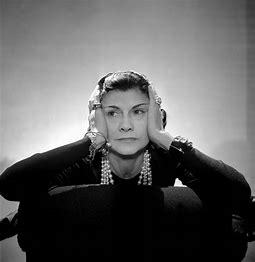
Fashion Designer Gabrielle Bonheur Chanel was one of the most influential women of the 20th century. She created a booming business during the Great War, and it continued until the Great Depression. Her Chanel No. 5 perfume was the top grossing fragrance in Europe. She had to shut down her business during the second World War. During the German occupation of France, she was accused of being involved with a Nazi officer. Some accused her of being a Nazi spy, she was never charged of being a collaborator. Chanel made a triumph return to prominence in the 1950s. She regains her popularity in the U.S. and Britain but in France some remain sour due to the wartime record. The Coco Chanel company became a prominent brand for many years and is currently one of the largest designers around the world.
Methodism was founded by John and Charles Wesley. Wesley was known to preached to Native and settlers. He was not very successful. There were multiple reasons. In Mark Noll book, he explained that he had a miscarried love affair and issues with local leaders. But it seems like the big hurdle to cross was the indifference between the Native and colonists. Mark Noll goes on to explained that this failure led to Welsey spiritual development, “for his lack of success seems to have driven him to a new reliance on divine grace”.
It was George Whitefield that introduce the brothers to practices which would lead to Methodist movement which included preaching out of doors and directing the message of salvation to common people neglected by the established churches.
The most important effect of the revivals was to cerate an alternative to the Church of England. Methodist missionaries would not appear until the 1770s and the organization would not follow for another decade after that, but the currents of revival that had entered the South by the 1750s were the harbingers of a great Methodist movement to come. The Methodist would soon become not just the Christian faith of the South but all North American Protestantism.
The reason for Methodist stall when first introduced by the Wesley’s was the War for Independence. Many Methodist Missionaries left colonies when violence started. One of the individuals who stayed was Francis Asbury. Many Americans felt Methodist were disloyal due to their relationship with the Church of England. It was Asbury who became the “super intendent” as Mark Noll describe in his book of Methodist. It would be the religion of the people. Asbury famous conference in Baltimore played a role in this growth. His message in a city and wilderness a like stressed traditional Christian themes with special emphases: God free grace, humanity liberty to accept or reject that grace. He used Methodist pattern of organization – local classes, preaching circuits and general conferences to further the growth.
References
Mills, Frederick V. “Allen, Richard (1760-1831), American Methodist preacher and founder of the African Methodist Episcopal church.” American National Biography. 1 Feb. 2000; Accessed 15 Mar. 2020.
Noll, Mark A. A History of Christianity in the United States and Canada 2nd Edition. Michigan: William B. Errdmans Publishing Company, 2019
Rable, George C. God’s Almost Chosen Peoples: A Religious History of the American Civil War. Chapel Hill: University of North Carolina Press, 2010
The Roaring twenties started so promising. Technology and innovations were making air travel, telephone, radio and electricity easier to use and access. The economy was on the rise even after an expensive Great War. But it came to a crashing end in 1930s. The Great Depression altered many American lives. It gave birth to many modern economic policies. But the question many historians have argued is, what caused the Great Depression?
Initially, many historians believed the Great Crash of 1929 caused the Great Depression. But, as more studies have been completed, some historians have steered from this notion. They still believed the Great Crash played a factor in the economic downspin but was not the cause of the Great Depression. An economic article by Jason Taylor explains “the economy turned down because of other factors and dragged down the stock market with it. Over the last several decades, in fact, economists have moved away from the notion that the stock market crash caused the Great Depression”.[1] These other factors are believed to be bad economic policies. Let’s start with the banking policies.
If you see the graph below, the money supply and the price level fell. This was due to bad banking polices leading to bank failures and reduction of bank deposits.[2] It started with small, rural banks losing money due to large loan failing.[3] These failures date back to 1925 “especially in the middle west where prices of commodities and farm land had started down in 1925 after an enormous rise during and following the First World War.[4] The stock market crash in 1929 started worry in the banking system. This led to banks closing to depositors. In 1931, “Britain departure from the gold standard” deepen the depression.[5] Eventually, the failed banks had to be liquidated at a considerable loss.[6] Unfortunately, these losses and polices led to depositors having their assets frozen or devalued. Many banks had no assistance to reopen business or to repay their depositors. These failures were attributed by bad policies of banks trying to grow rapidly by taking on high risk loans.
As explained above, the money supply and pricing level falling played a role in causing the depression, but a decline of economic output led to money and prices dropping. The demand for supplies were down. With the demand being down, production slowed down, and this led to unemployment. If unemployment is high, wages would drop due to people rather working for less than not working at all. However, President Hebert Hoover believed in the High-Wage Doctrine. Hoover believed higher wages led to “prosperity, rather than the other way around”.[7] If you make more money, you will spend more money is the belief of the President and his staff. This leads to more supply and demand. However, this led to employers having higher marginal costs which led to products being more expensive.
The last policy was the Smoot-Hawley Tariff. This tariff raised the average tariff rate on dutiable imports. It was the highest rate in “nearly hundred years”.[8] The tariff was met with a wave of retaliation. Countries like Spain, Switzerland boycotted American goods. Canada, Mexico, Cuba and France raised their tariffs on American goods. President Franklin Roosevelt explained the tariff, “forced other countries off gold by preventing them from paying their debts in goods. This was the standard accusation that the United States had failed to act like a creditor nation”.[9] Roosevelt argued that when we ran out of gold, more countries sent goods which caused lower prices when in reality it should’ve been opposite.
The Great Depression showed an underlying defect in the system. Or does it show, at times policies do more harm than help. In the end, it was caused due to economic policies and lasted to the Second World War. And unfortunately, it was not the last economic downturn in American History.
Biography
Douglass, Lonna, and Brett Flehinger. “Great Depression: Causes: What Caused the Great Depression?” History in Dispute, edited by Robert J. Allison, vol. 3: American Social and Political Movements, 1900-1945: Pursuit of Progress, St. James Press, 2000, pp. 54-61. Gale In Context: U.S. History, https://link-galecom.ezproxy.liberty.edu/apps/doc/CX2876300015/UHIC?u=vic_liberty&sid=UHIC&xid=d443938e. Accessed 22 Mar. 2020.
Hamby, Alonzo L. For the Survival of Democracy: Franklin Roosevelt and the World Crisis of the 1930s. New York: Free Press, 2004.
Kindleberger, Charles Poor. The World in Depression, 1929-1939. Berkeley: University of California Press, 1973.
Richardson, Gary. “Categories and Causes of Bank Distress during the Great Depression, 1929–1933: The Illiquidity Versus Insolvency Debate Revisited.” Explorations in Economic History 44, no. 4 (2007): 588-607.
Taylor, Jason. The Great Depression and Its Aftermath 1929–1950s. CQ Press Guide to U.S. Economic Policy /. Thousand Oaks, California: CQ Press, 2014.
Footnotes
[1] Jason Taylor, The Great Depression and Its Aftermath 1929–1950s, CQ Press Guide to U.S. Economic Policy. Thousand Oaks, California: CQ Press, 2014.
[3] Gary Richardson, “Categories and Causes of Bank Distress during the Great Depression, 1929–1933: The Illiquidity Versus Insolvency Debate Revisited.” Explorations in Economic History 44, no. 4 (2007): 588-607.
[4] Kindleberger, Charles Kindleberger, The World in Depression, 1929-1939, (Berkeley: University of California Press, 1973), 129
[5] Gary Richardson, “Categories and Causes of Bank Distress during the Great Depression, 1929–1933: The Illiquidity Versus Insolvency Debate Revisited.”
Baseball is known as America’s past time. From 1900-1920’s, baseball was one of the country’s most popular sport. There were many household names with celebrity status. Ty Cobb, Lou Gehrig and Lefty Grove are to name a few. But the biggest name was George Herman “Babe” Ruth Jr. In 1920, the Red Sox sold Babe Ruth to their rival the New York Yankees which altered the economic landscape of both teams and Babe Ruth himself. The financial impact this move had helped the team’s owners which was unprecedent for its time. But, more importantly it also gave Ruth power to financially better himself.
Babe Ruth played Major League Baseball from 1914-1935. Upon retiring from baseball in 1935, he was the homerun king. Many sportswriters argued today if Babe Ruth is the greatest baseball player to ever play the game. He was a sensation and “baseball greatest attraction”.[1] To call him an attraction was absolutely justified; a well-known story was the Boston Red Sox sold his rights to the New York Yankees. The move was a first for this era. The New York Yankees purchased Babe Ruth “for $100,000, highest price in baseball annals”.[2] Ruth financial value to the Yankees was worth the remarkable spending. They felt Ruth would bring success to the team which in turn lead to financial return.
Ruth annual salary was $20,000 a year after being sold to the Yankees. He initially was making $10,000 a year as a Red Sox. The Red Sox financial reward was not only the $100,000 selling price but the Yank’s loaned the Red Sox $300,000. This amount was used to help then owner, Harry Frazee’s Broadway theaters.[3] This loan helped Frazee’s theaters become stabilized after some failures. He always wanted success in the entertainment industry. This amount helped Frazee “put on the smash hit Broadway musical No, No, Nanette” which would not had occurred without this move.[4] These facts showed Ruth status as a financial asset to not only himself but to the Yankees and Red Sox.
The impact Ruth had on the Red Sox does not pale into comparison with the Yankees. The amount the Yankees paid was unprecedented but if you reviewed the chart below (Table 1). It will show the revenue impact Ruth had on the Yankees. The biggest revenue increase was in 1926. The Yankees revenue increased by $240,597.00. Overall, the Yankees profited over 2 million dollars during Ruth Era. To put in perspectives, Ruth’s highest annual salary earnings was $84,098.00. In 1926, Ruth salary was $49,605.00, this was the year Yankees had their most profitable success.[5]
Ruth understood the affect he had on the team and the league. As we see today with superstar athletes, there are some contractual disputes. It was in the late 20s to the next decade “Ruth’s salary clashes with Yankees owner Jacob Ruppert became the subject of much public attention and discussion”.[6] This is not uncommon today but during this era, it was ahead of its time in sports. Ruth challenged the labor system and how players were treated “as chattel, literally selling them from one team to another and providing them no option of seeking employment on other teams”.[7] Ruth effected the game on and off field.
Ruth salary average from 1926 to 1932 was $76,110.00. His salary had a disparity with U.S. Production workers. Many workers made around $1000.00 a year.[8] These figures show Ruth’s ability to negotiate his contract value. He understood his economical value to a team that was profiting from his likeness. He was the highest paid player in the league, but he was also the most profitable.
Babe Ruth was the most famous financial investment in Yankees history. They were awarded for their spending by over 1200% in profit. Not only did the Yankees benefit but Ruth himself was financially compensated. He had to fight for his salary at times because he understood his economical value. Ruth was ahead of his time as today, many athlete’s holdout due to contract dispute in a billion-dollar industry.
Pantuosco, Louis J. and Gary Stone. “babe Ruth as a Free Agent: What the Old-Time Greats would Earn in Today’s Labor Market for Baseball Players.” The American Economist 55, no. 2 (2010): 154-161.
Wehrle, Edmund F. Breaking Babe Ruth: Baseball’s Campaign Against Its Biggest Star. Columbia: University of Missouri Press, 2018.
[1] Michael Haupert, “The Sultan of swag: Babe Ruth as a financial investment.” The Baseball Research Journal 44, no. 2 (2015): 100+. Gale General OneFile (accessed April 8, 2020).
[4] George Vass, “Some of baseball’s strangest deals ever made from Babe Ruth being unloaded for financial purposes to clubs exchanging managers, there have been some odd trades in the game’s history.” Baseball Digest, September-October 2010, 18+. Gale General OneFile (accessed April 8, 2020).
Charles W. Chesnutt was an African American author during the postbellum era. Some of his most studied work was fictional tales called The Wife of His Youth and The Conjure Woman. Chesnutt was known as a novelist but would say he was an entrepreneur. Not only being a novelist, he was a school Principal, he was a practicing attorney, while practicing law, he became a success businessman with a legal stenography company.
His works was praised by his readers, but he was not a best-selling author during his time. He was writing a generation too early due writing methods. Chesnutt molded his entire life after the kind of enlightenment philosophies, “Gilded Age entrepreneurialism, individualist self-determination, rigorous self-improvement” which he felt could extend to the masses and abolish the beliefs of black folk culture.[1]
Chesnutt is quoted of saying “It is not altogether the money. It is a mixture of motives. I want fame; I want money; I want to raise my children in a different rank of life from that I sprang from”.[2] Chesnutt’s belief that authorship is a vocation that, far from transcending economics, is chosen in large measure because it can serve as a unique means by which to secure both fame and fortune.
[1] Taylor, Matthew A. “HOODOO YOU THINK YOU ARE?: Self-Conjuration in Chesnutt’s The Conjure Woman.” In Universes without Us: Posthuman Cosmologies in American Literature, 113-38. (Minneapolis; London: University of Minnesota Press, 2013), 114
Taylor, Matthew A. “HOODOO YOU THINK YOU ARE?: Self-Conjuration in Chesnutt’s The Conjure Woman.” In Universes without Us: Posthuman Cosmologies in American Literature, 113-38. Minneapolis; London: University of Minnesota Press, 2013. Accessed April 1, 2020. www.jstor.org/stable/10.5749/j.ctt5vkbw6.8.
Wood, Mary E. ““A State of Mind Akin to Madness”: Charles W. Chesnutt’s Short Fiction and the New Psychiatry.” American Literary Realism 44, no. 3 (2012): 189-208. Accessed April 2, 2020. doi:10.5406/amerlitereal.44.3.0189.
Transportation is vital to our economy. Today, many are arguing if the government should aid the airline industry. An industry this country depends on to import goods, commute for business and pleasure and utilize to send packages. The air industry today is incredibly like the railroad industry in postbellum America. It created a commercial reservoir which for years afterward sustained much of the economy, including their own industry.
Extended explanation of chosen research methodology
The author chose railroad expansion and the effect it had on the economy after visiting Europe and saw how rail systems are still being utilized as important mode of transportation. The sources being used are both primary and secondary. A Journal article by two authors named Ebru Solakoglu and Barry Goodwin get into the effects railroad development had on pricing behavior. Robert Wiebe book, The Search for Order, 1877-1920, explains how the spread of science, technology and industrialism effected the country after the Reconstruction era. Secondary source was an article in the Saber and Scroll Journal, in the article, Greg Balliet explains the value railroad industry had on America expansion.
Analytical comparison
American entrepreneurs saw potential with the railways as soon as the first railroad was built in England in 1803.[1] After the Civil War, the country was continuing to grow, adding the Dakotas, Nebraska, Colorado, Montana and Washington territories. Railroads with the assistance of machinery and scientific improvement opened more farmland towards the end of the century.[2] Agricultural cultivation began as farmers purchased land with access to grow vegetables, fruits and crops like wheat. Wheat became a valuable product and agriculture needed a method to quickly transport. Shipments to the “northern, eastern and southern states grew by over 10% annually”.[3] Figure 1 shows the growth in mileage from the end of Civil War. Railroad expansions became an important factor to trade with all these regions.
The railroad networks and a rise of crossroad merchants incorporated the upcountry into the national market economy. This traces back to railroad baron, Leland Stanford when he announced joining of the Central Pacific and the Union railroad to form the Transcontinental Railroad. It boosts the economy in certain areas i.e., like Bourbon County in Kentucky. The area had large landed estates and “one of the wealthiest agricultural counties in the state, never ranking below fourth value in value” during postbellum.[4] This was possible due to price convergence.
By the time the railroad expansion had reached its limits, some areas needed to specialize in specific crops. An example is wheat “could move to the frontier regions because of its higher value per unit of weight”.[5] The expansion and more trade reduced transportation cost which allowed the settlements in the frontier. The frontier settlement specialized in wheat production.[6] With the specialized and the demands across the Atlantic, it decreased price differentials. Areas could trade due to its crop mix which allowed sellers to “move between markets and earn higher return”.[7]
Agriculture was not the only resource effected due to the railroad expansion. Other resources like coal, iron and steel were harvested in an unprecedented rate. The industry was able to bring markets and/or resources together which allowed them to flourish like never seen before.
The discussion of personal travel must be explained when it came to railroad. The resounding effect it had on business or personal travel was remarkable. An example is given in the article by Greg Balliet, in the late 18th century if some wanted to travel from New York to Maine it would take a week. However, by 1890s, the same trip was only one day. It allowed citizens to travel comfortably and areas that did not have access previously.
Redenius, Scott A. “Regional Economic Development and Variation in Postbellum National Bank Profit Rates.” Business History Conference. Business and Economic History on-Line : Papers Presented at the BHC Annual Meeting 5, (2007): 1.
Conclusion
In summary, the economic effect the railroad system had on postbellum was substantial. There was uncertainty with this new industry. But it opened doors and path for many resources. It provided agriculture with a faster mode of transportation to thrive in the market. Railroads brought different resources together which allowed steel, iron and coal to flourish in postbellum. It made traveling more affordable and the ability to move from coast to coast.
[1] Balliet, Greg,”Railroads and their Effect on American Society, 1840-1890,” Saber and Scroll, Vol. 2: Issue 4, Article 4, 2013, 8
[2] Wiebe, Robert H, The Search for Order, 1877-1920 (Hang and Wang: New York, 1967), 15
[3] Guven Solakoglu, Ebru and Goodwin, Barry K, “The effects of railroad development on price convergence among the states of the USA from 1866 to 1906”, Applied Economics, 37, 1747-1761, 2005, 1747
[4] Davis, Charles L, “the Railroad Expansion Controversy in Postbellum Bourbon County: Conflicting Economic Interests and Ideological Perspectives among Urban and Rural Elites.” The Register of the Kentucky Historical Society 112, no. 1, (51-82, 2014), 59
[5] Guven Solakoglu, Ebru and Goodwin, Barry K, “The effects of railroad development on price convergence among the states of the USA from 1866 to 1906”, Applied Economics, 37, 1747-1761, 2005, 1748
Davis, Charles L. “the Railroad Expansion Controversy in Postbellum Bourbon County: Conflicting Economic Interests and Ideological Perspectives among Urban and Rural Elites.” The Register of the Kentucky Historical Society 112, no. 1 (2014): 51-82.
Guven Solakoglu, Ebru and Goodwin, Barry K. “The effects of railroad development on price convergence among the states of the USA from 1866 to 1906”. Applied Economics, 37, 1747-1761, 2005
Brown, Thomas J. Reconstructions New Perspectives on the Postbellum United States. Oxford: Oxford University Press, 2006.
Redenius, Scott A. “Regional Economic Development and Variation in Postbellum National Bank Profit Rates.” Business History Conference. Business and Economic History on-Line : Papers Presented at the BHC Annual Meeting 5, (2007): 1.







 Mostly History